
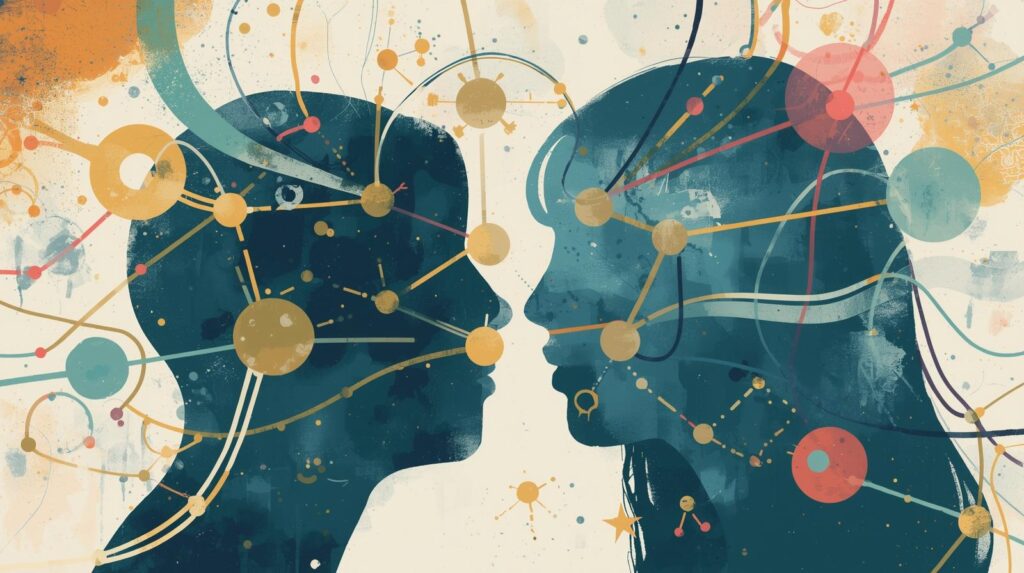
Most people think their relationship problems come from choosing the wrong partner.
But psychology says something deeper:
Your childhood experiences shape the way you love, trust, react, and connect as an adult.
The way your caregivers treated you becomes the blueprint for how you treat yourself — and how you behave in relationships.
Whether you become avoidant, anxious, secure, distant, clingy, or emotionally shut down…
It didn’t start with your partner.
It started with your wounds.
This is how childhood trauma silently shapes your adult relationships — and how understanding it can finally set you free.
🔥 1. Childhood Trauma Teaches You What Love “Feels Like”
If love felt like:
- inconsistency
- fear
- yelling
- walking on eggshells
- emotional distance
- being ignored
- being abandoned
…your nervous system learned that this is normal.
So as an adult, you may unconsciously choose similar situations — not because they’re healthy, but because they’re familiar.
Trauma makes dysfunction feel like home.
🔥 2. Trauma Creates Your Attachment Style
Attachment science shows four main styles:
✔ Secure Attachment
Grew up with stable love → trust, communicate, feel safe.
✔ Anxious Attachment
Childhood love was inconsistent → fear of losing people, overthinking, needing reassurance.
✔ Avoidant Attachment
Love was unavailable → fear intimacy, stay distant, rely only on yourself.
✔ Disorganized Attachment
Love and danger came from the same person → chaotic, intense, push-pull dynamics.
Your adult relationships follow this blueprint until you heal the root wound.
🔥 3. Trauma Makes You Overreact — or Not React at All
When you grew up feeling unsafe, your brain learned to protect you through:
- shutting down
- pleasing people
- running away
- getting angry fast
- constantly worrying
- becoming hypervigilant
Your reactions today are often survival patterns from your childhood.
You’re not “too much” — you were forced to adapt.
🔥 4. You Repeat What You Didn’t Repair
Most adults repeat the emotional patterns they saw growing up:
✔ choosing emotionally unavailable partners
✔ trying to “fix” people
✔ staying in toxic cycles
✔ pushing away people who care
✔ confusing chaos with passion
This isn’t because you’re broken.
It’s because your subconscious is trying to recreate familiar scenarios — hoping to finally “win” the love you didn’t get.
🔥 5. Childhood Trauma Affects Your Self-Worth
Kids don’t think:
“My parents failed me.”
They think:
“I wasn’t good enough.”
So as an adult you may feel:
- hard to love
- not worthy
- afraid of abandonment
- scared of being seen
- like you have to earn love
Your childhood shaped your self-esteem — but it doesn’t have to define your future.
🔥 6. Trauma Makes You Attract What You Fear
Unhealed wounds create powerful patterns:
✔ fear of abandonment → attracts inconsistent partners
✔ fear of intimacy → attracts avoidant partners
✔ need to feel safe → attracts controlling partners
✔ low self-worth → attracts emotional takers
Healing breaks these patterns.
🔥 7. Understanding Your Attachment Style Helps You Break the Cycle
Awareness is the first step toward emotional freedom.
Psychologists recommend:
✔ learning your attachment triggers
✔ practicing self-soothing
✔ choosing partners who communicate
✔ slowing down your reactions
✔ building emotional safety
✔ going to therapy or reading about attachment
✔ relearning what healthy love looks like
You can rewire your attachment style.
You can become secure.
You can change the way you love.
⭐ The Truth
Your childhood shaped you — but it doesn’t own you.
Your patterns explain your pain, but they do not define your destiny.
You’re allowed to heal.
You’re allowed to outgrow old wounds.
You’re allowed to become someone who loves securely and peacefully.
Healing your attachment wounds is how you break generational cycles — and create the kind of relationships you always deserved.