
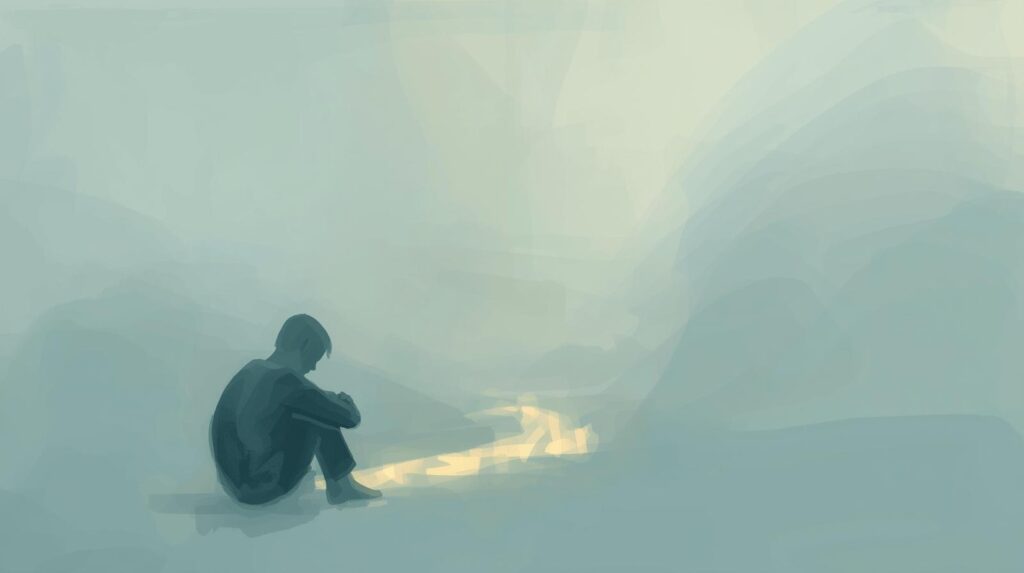
When life becomes heavy, confusing, or emotionally overwhelming, the hardest part is often knowing where to begin.
Most people don’t start healing because they feel lost, stuck, or afraid of facing what hurts.
If you feel:
- Not yourself
- Emotionally exhausted
- Confused about what’s wrong
- Unable to take the first step
… this guide is for you.
This is a therapist-approved, structured blueprint to help you begin healing safely and effectively — even if you feel completely lost.
⭐ 1. Start With Awareness (The “What’s Really Going On?” Step)
Most people try to fix their life without understanding what’s happening inside them.
Healing starts with clarity.
Ask yourself gently:
- “What am I feeling right now?”
- “What triggered this season of my life?”
- “What feels heavy?”
- “What feels missing?”
You can’t heal what you cannot name.
Awareness is step one.
⭐ 2. Regulate Before You “Fix” (You Can’t Heal in Survival Mode)
If your nervous system is overwhelmed, your brain can’t process emotions or make changes.
Before digging into trauma or habits, focus on stabilizing your system.
Evidence-based tools:
- Slow breathing with long exhales
- Warm showers
- Grounding (feet on the floor)
- Gentle stretching
- Taking a 10-minute walk
This helps shift from fight-or-flight → calm + clarity.
⭐ 3. Identify the Root Category of Your Pain
Most emotional struggles fall into 6 major categories:
1️⃣ Unprocessed trauma
2️⃣ Chronic stress or burnout
3️⃣ Relationship wounds
4️⃣ Identity confusion / loss of self
5️⃣ Low self-worth
6️⃣ Emotional neglect (past or present)
Once you know the category, the healing path becomes clearer.
⭐ 4. Begin Micro-Healing (Small Steps That Create Big Shifts)
Do NOT try to rebuild your whole life at once.
Therapists use micro-healing — the art of small, achievable actions.
Examples:
- Drink water when you wake up
- Make your bed
- Go outside for sunlight
- Clean one corner
- Reduce one stressor
- Say “no” once
- Write one sentence in a journal
Small wins → restart the motivation system → healing momentum grows.
⭐ 5. Reconnect With Your Emotional Self
Many people feel lost because they’ve abandoned their inner world.
Try:
- Journaling
- Saying your emotions out loud
- Asking: “What do I need right now?”
- Letting yourself rest
- Identifying what hurts and why
Healing = Coming back home to yourself.
⭐ 6. Restore Your Environment (Your Space Shapes Your Mind)
Your environment can move you toward healing or keep you stuck.
Make small supportive changes:
- Declutter one area
- Add soft lighting
- Make your bed
- Create a peaceful corner
- Remove what drains you
- Add what soothes you
Your nervous system responds instantly to your surroundings.
⭐ 7. Rebuild Your Core Routines
Healing requires structure, not perfection.
Focus on:
- Sleep improvement
- Hydration
- Nutritious food
- Movement
- Consistent wake/sleep schedule
Predictability = emotional safety.
⭐ 8. Seek Connection (Healing Rarely Happens Alone)
Humans need connection to regulate the nervous system.
Choose one:
- A friend
- A therapist
- A support group
- A safe family member
When someone sees you, your healing accelerates.
⭐ 9. Set Gentle Boundaries
Healing often means removing what hurts you before adding what heals you.
Ask:
- Who drains my energy?
- Who makes me anxious?
- Who criticizes instead of supports?
Your healing depends on your environment.
⭐ 10. Create a Future Self to Move Toward
The brain heals faster when it knows who you’re becoming.
Write:
- “I want to become someone who ___.”
- “My healed version looks like ___.”
- “Future me feels ___.”
Healing becomes easier when you have direction.
⭐ Healing Doesn’t Start With Answers — It Starts With the First Step
You don’t need to fix everything today.
You only need to begin.
Healing happens slowly:
✨ one breath
✨ one choice
✨ one boundary
✨ one habit
✨ one moment of honesty
You are not behind.
You are rebuilding — and that is enough.